For PSLE Oral Stimulus-Based Conversation (SBC), the aim is simple: help students build content, speak with confidence, and give a strong first answer before the examiner has to ask follow-up questions.
Why SBC feels difficult
Students usually face two problems in stimulus-based conversation: content and confidence. Content means knowing what to say beyond the first obvious observation. Confidence means sounding bright, clear, and engaged rather than hesitant, flat, or unsure.
Content
We've worked with students who could talk our ears off about gaming and using digital devices, but could barely manage two sentences about areas they are less familiar with, such as the environment or volunteering.
Confidence
At the same time, we've had students who know their stuff really well. But they aren't in the habit of speaking energetically and confidently.
How we approach it
First, practice makes perfect. Cher.ai gives actionable feedback, great model answers that students can internalise, and gives students an avenue to practice and improve as fast as they are willing to work.
Second, content is king. If students don't know what to talk about, it's really difficult to move beyond basic comments in relation to the stimulus. Cher.ai focuses on helping students build content exposure and familiarity. It does this by:
- giving suggestions on how to improve students' existing answers, including with new reasoning and examples; and
- for each practice, giving at least two other points-of-view or angles that a student did not talk about, but are relevant and useful to understand.
Third, impressions matter, so a confident delivery is essential. Cher.ai watches for the usual signals of a less-than-confident delivery, such as hesitations, filler words, and stumbles, but also assesses overall impressions of confidence, eloquence and brightness of delivery.
Fourth, and critically, we optimise for a strong first answer. Yes, in exams, examiners may engage you in back and forth. But there's only 5 minutes of examination time for both reading aloud and stimulus-based conversation. Realistically, we're not going to have a lot of time for extended conversations. And more importantly, we should not rely on examiners' questions to flesh out our answers for us. Instead, let's practice giving a great, well-developed first answer, and then adapt to examiners' subsequent questions.
Fifth, we use Mind Stretcher's PEERS framework. Yes, there are many ways to give a great answer, and PEERS is not the only way. But it's a simple framework to help students organise their thoughts on the spot, and give a cogent, logical, well-developed personal response.
Use PEERS to build the answer
PEERS stands for Point, Explain, Experience, Reflect, and Summarise. It helps students move from a one-line answer to a response that is personal, logical, and developed.
How to practice with Cher.ai
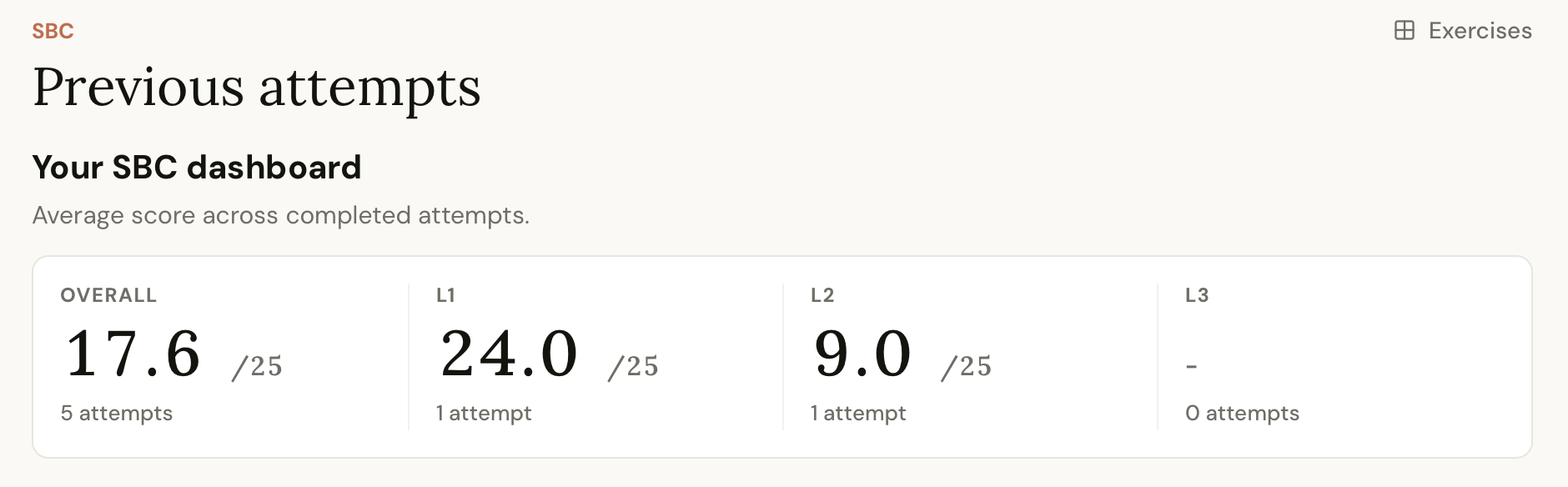
In light of the above, in Cher.ai you will practice question-by-question. That will also allow us to evaluate how you do on the different kinds of questions:
- Level 1 (L1): Questions that are primarily about the stimulus and picture. For example: how do you think the student is feeling? Why?
- Level 2 (L2): Questions that start to touch on your personal views and preferences. For example: have you ever been in this situation before? How did you handle it?
- Level 3 (L3): Questions that discuss broader societal questions. For example: Do you have ideas of how to reduce bullying in schools?
Our dashboard will summarise your performance on each level.
Of course, in the exam, you should expect to answer three prompts back-to-back, and your answers will build on your previous pointers.
A look at a sample report
Here is a real production report. The prompt is: Do you think the girl and her grandfather are enjoying themselves? Why or why not?
The report keeps the original answer, then shows the grading, detailed feedback, the improved PEERS answer, and additional content builders in the same report style students see in Cher.ai.


Four key value-added features
- PSLE scoring according to official MOE rubrics, adapted for Cher.ai.
- Detailed and actionable feedback per rubric.
- A model answer that weaves in a student's actual points, using Mind Stretcher's PEERS framework.
- Additional content builders: at least two additional perspectives that students can learn from.
Together this enables a complete feedback loop that students can use to improve.
How to practice with cher.ai
At launch, Cher.ai's SBC practice library includes 20 topics across about eight themes. Each topic gives students a visual stimulus and three practice questions, so students can rehearse the thinking and speaking habits needed for PSLE Oral SBC.
- Choose an SBC topic. Start with one picture and one question. The goal is not to memorise a model answer, but to practise reacting to a stimulus.
- Answer aloud. Record the first answer as naturally as possible. This captures the real problem: what the student can say on the spot.
- Read the feedback. Cher.ai analyses the answer against SBC expectations and gives feedback on content, language, and delivery.
- Apply PEERS. Use Mind Stretcher's PEERS framework to turn a short answer into a fuller, more organised response.
- Study the improved answer. Cher.ai shows how the student's own points could be developed into a stronger answer.
- Read extra ideas. Look at other reasonable angles the student could have raised for the same question.
- Try again. Practise the same topic again, this time making the answer clearer, more personal, and more confident.
How parents can help
Encourage your children to practice at least 1 SBC exercise every day.
You can also use our SBC kit to engage your child in discussions on everyday topics. Our goal with these conversations is to help our children gain real-world experience thinking through their own thoughts, and articulating them.
In combination with cher.ai's structured feedback, which can help them build content and get detailed examiner-style feedback, we can improve rapidly.
Ready to practise
More practice. More feedback. Better SBC answers.
Help students build content, speak with confidence, and learn what a stronger answer sounds like before the actual oral examination.
Frequently asked questions
Why does PSLE Oral SBC feel difficult for many students?
Students usually struggle with content and confidence. Content means knowing what to say beyond the first obvious observation. Confidence means sounding bright, clear, and engaged rather than hesitant, flat, or unsure.
How does Cher.ai help students build SBC content?
Cher.ai gives suggestions on how to improve a student's existing answer, including new reasoning and examples. For each practice, it also gives at least two other useful points-of-view or angles that the student did not talk about.
Should students practise one SBC question at a time?
Yes. Practising question-by-question helps students improve the different kinds of SBC responses: L1 picture-based questions, L2 personal-view questions, and L3 broader societal questions. In the exam, students should still expect to answer three prompts back-to-back.
What makes a strong first answer for PSLE Oral SBC?
A strong first answer is clear, developed, personal, and confident. Students should not rely on examiners' follow-up questions to flesh out their answers for them.
How can parents help with SBC practice at home?
Parents can encourage children to practise at least one SBC exercise every day and use everyday topics to help them gain real-world experience thinking through and articulating their own thoughts.
Notice how the 'Experience' section is expanded into a mini-story with specific details (Chinese New Year, Hokkien songs, grandmother's living room). This makes the answer much more interesting. The vocabulary is also upgraded with phrases like "beaming with joy", "immersed in the music", and "different generations". The 'Reflect' section adds maturity to the answer by discussing the broader impact of music.